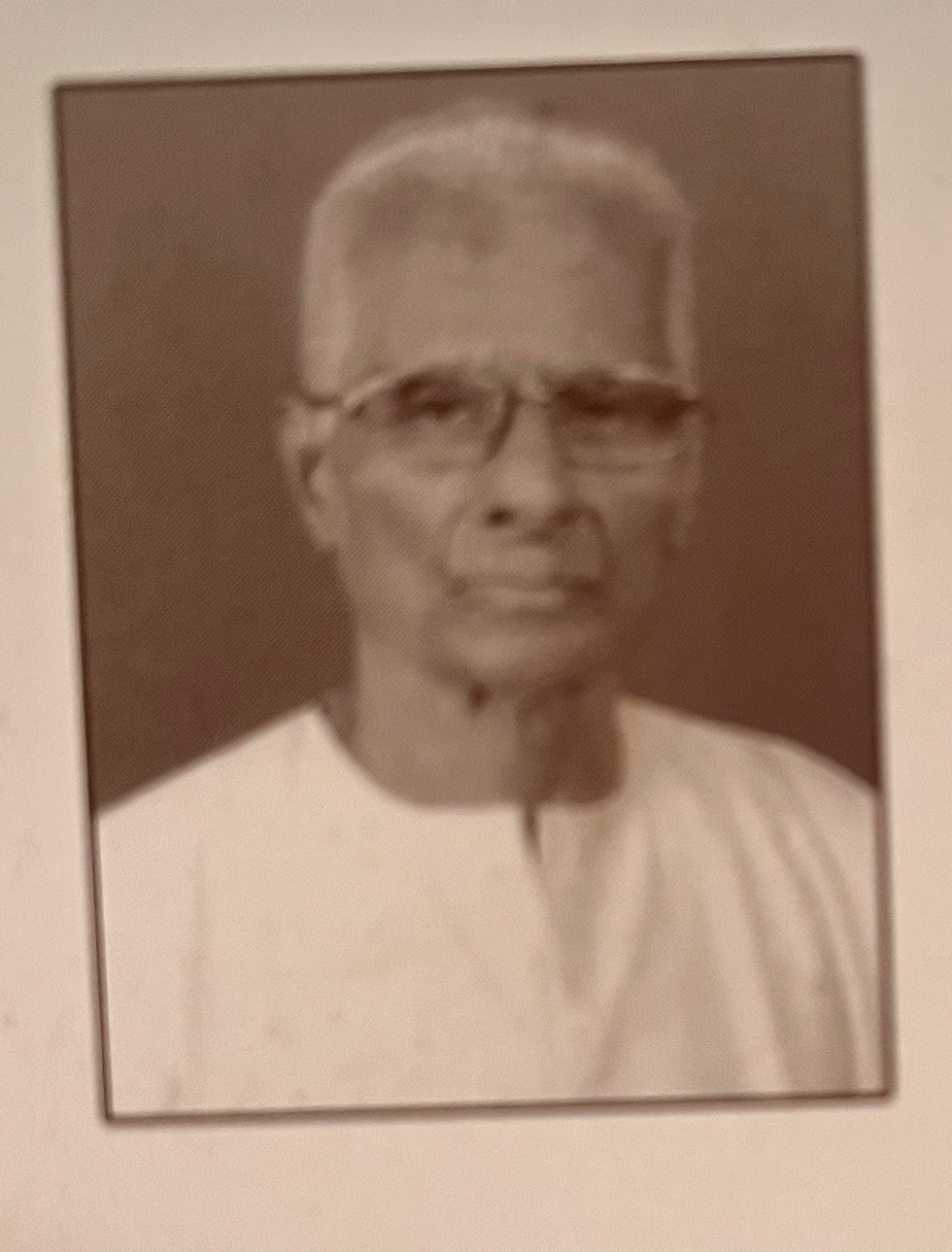
Engineer-Maker: The Quiet Legacy of Prof. N.R. Shetty


Wrote when he was here and don’t have it in me to change it’s tense…
Grief stricken over the passing of someone I knew in person.
I first met Prof. N.R. Shetty when I was all but ten years old. It was at an educational conference, and while I buried my head inside an Agatha Christie novel, I would occasionally look up and watch him speak to my mother. He was about my height—perhaps an inch or two taller. I stand 5'6" on a good day, 5'5" on a bad one, and back then, at ten, I must have been a bit shorter. Yet, he commanded the room with a very different kind of aura—an aura that reeked not of pomp, but of pure respect.
Years later, when I stood at the crossroads of pursuing engineering, I met him again. He still reeked of respect. My last meeting with him was in 2018, as I discussed my plans to go to Oxford. He shared stories about his time in England, his voice full of the same energy that had once filled lecture halls and boardrooms. He was in his early 80s then, but had more energy than I do even this morning. (For context, I am internally 140 years old.)
But this story isn't about age. It isn't about height. It isn't even about respect. It is about something deeper: about the Engineer-Maker.
Prof. N.R. Shetty, the man who led KREC during the fixed price era (if you've read my article on dowry, you know what I mean). He made engineers so good that they dominated the marriage market and the industry. To be atop that market then, it wasn't enough to just have a degree from KREC—you had to have landed a job or created one that was taking you places. And NRS ensured his students were on top of their game.
Today, his students are leaders—founders of firms, architects of AI infrastructure, VPs, and even retirees after storied careers.
He is a Bunt at his core. He is the father of two daughters. Girl students who studied on his campus when he was in charge insisted on better safety and more opportunity, and they never felt less than the opposite gender, or sidelined because they were girls. During collegiate fests, girls participated in all avenues and safety and opportunity were never a concern. Leadership roles were given to women faculty, who again never felt less seen by leadership. He is Bunt also in the way that, like the hoteliers, he focuses on quality. Everything comes down to quality. Quality is something all Bunts, regardless of industry, will emphasise.
He is also Bunt in his generosity. And when it comes to education, especially if it's a girl child, there will always be help. Bunts have reported a quiet Bunt quota at Nitte, where a Bunt could get a fee concession if they couldn't afford it. Bunts who appealed late fee payments or asked for help during their studies were almost always obliged.
If you notice his interviews, he is not pitching Nitte to you. He is simply stating facts. He tells you, "This is what I've done and what we've done, so you should expect quality education from us because of these things."
His cadence is effortless. His accolades are many but he doesn't legitimise what he's saying by a prequel of achievements. He doesn't go on a rant to convince you.
He makes it look so easy that you think for a minute, well, I could do it too. Why couldn't I? But it's not that simple. He was an engineer-maker.
His cabin was also of interest, it always doubled up as a conference room. It had a horizontal desk and then a long table in front of it. You had 4 people coming to meet him and sometimes 20, and he always had a place for every one of them.
Another anecdote that I heard of was about a young Bunt educationist who moved to Bangalore in the mid-90s. By the year 2000, she had begun to make waves in the education industry. Prof. NRS remembered meeting her in the early '90s, and many years later, he reconnected with her in a meaningful way. He took the time to visit her, ensuring she knew that she had his unwavering support. It wasn’t about giving grand advice or making any lofty promises—it was a simple gesture of reassurance. He let her know that if she ever needed guidance, she could always reach out to him.
That was the hallmark of NRS’s leadership. It wasn’t just about his direct impact on institutions or accolades; it was his ability to recognize and support emerging leaders, especially those from his community. He was a guru, not just in title, but in practice. A man who took the time to build relationships, uplift others, and show that leadership is as much about lifting others up as it is about making waves yourself.
Breaking Down His Impact
Scenario 1: Quiet Gateways to Opportunity
After years at KREC and later at Nitte, Prof. Shetty was known for creating employment paths for his people. But make no mistake—this was not nepotism. It was caste-blind, community-blind. If you were from Mangalore, Udupi, or Karkala, and you needed a job, Nitte was a place where you might find your future.
While the institution belonged to N. Vinaya Hegde and his family (I write more about him in the batch of essays I will release in July), NRS was a decision-maker at the engineering institute in Bangalore, and he made sure opportunity wasn't a closed door. Those who worked under him—fondly calling him "NRS"—would tell you only good things. Sure, he must have had his flaws, bad days even, but 95% of the time, he wasn't just a boss—he was a leader. He understood people, their work ethic, where they thrived, and he built an environment to help them grow.
Example 1: Malini
Malini, from Mangalore, married a Bangalore-based boy and moved in 2002, searching for a job. Armed with an engineering degree, she managed a meeting at Nitte. When her profile hit NRS’s desk, she was hired:
She was "ooru daal"— from the native land. She needed a job—and they could place her.
Once hired, the pathway under NRS opened: Want an MTech? She could get it at Nitte. A PhD? She could pursue it there too. If she whispered about financial constraints, and if it reached NRS's ears—it was quietly taken care of. He was an advocate for education and growth.
Example 2: Hari
Hari from Karkala moved to Bangalore looking for an opportunity. He found it at Nitte. Hari worked hard—but when his mother fell ill, he needed time off. Some say this spirit of compassion came from NRS's KREC days, a government institution where human needs came before metrics. NRS didn’t panic about performance graphs; he understood life. Hari knew his job was safe while he cared for his mother. That was the kind of leader he was.
Example 3: Deepa
Deepa was a talented programmer who joined as an Assistant Professor. NRS could sniff out talent from miles away. He invested in her—sending her to competitions, opening grant access, setting up labs, and cutting through bureaucratic fatigue. While other institutions buckled under red tape, Deepa thrived because he made decisions simple for those who were brilliant.
So some things that he paved the way for,
(1) Bunt women who wanted an academic career or a career in technology and in the city of Bangalore, were sent to live in hostels entrusting their belief that it was a Bunt-owned institution and led by an ex-KREC-principal who also happened to be Bunt.
(2) Bunts who were limited financially but were intellectually capable found a home to harness their skills under his leadership
(3) Bunts under his employment in the marriage market did prospectively well
(4) Bunts who worked under him and found better opportunities, was confident that he would let them grow and could bank on his endorsement.
Scenario 2: The Guru- Beyond Chalk and Board
The tragedy of quiet heroes is that they often stay too quiet. As NRS aged, he would chair events, and pose for photos—not for vanity, but because duty called. There was no air of "capture me in glory" around him.
He was the ultimate guru—the kind whose students would, years later, approach microphones, cock shy smiles, and whisper, "I'm here because of NRS. He was once my guru."
He deserves a Dronacharya Award because he moved mountains for his students’ success without seeking applause. As a professor, he taught with clarity, without PowerPoint slides, without Google—armed only with his mind, chalk, and discipline to make students understand.
As Principal of KREC, his impact deepened, especially on the Bunt community.
Under NRS, KREC became a brand. Government-run, difficult to get into—an IIT-level grind. You were already a diamond upon entry, but under his leadership, you were polished to brilliance. Soon, Bunts began whispering, "NR Shettr altha principal ithe"—NR Shetty is now principal. Trust grew. It was one of them.
During the fixed price era, studying at KREC under him was its own kind of currency, elevating dowries (badhi) and matrimonial prospects.
It became almost formulaic: Get into KREC ➔ Study under NRS ➔ Land a great job ➔ Secure a great marriage alliance.
And it worked. A study tracing students with Bunt last names during his principalship showed 97.3% of them carved out astounding careers. Entrepreneurs, C-Suite executives, engineers turned professors, and leaders in every sphere. (Our study was limited, using LinkedIn and available digital traces; surely there are hidden legends without online footprints.)
Example: Rohan
Rohan, in 1988, had just finished pre-university exams. His brother, a commerce graduate, told him—engineering is the future. MIT and KREC became his targets. KREC had just introduced the MCA program. After five principals the family didn’t recognize, a Shetty returned from England, a man who had studied at Madras University and IIT. His credentials dazzled—but more than that, he was one of their own.
It mattered.
Rohan got into KREC. His senior whispered advice—NRS told me to say this during interviews; it worked. And when Rohan graduated, carrying KREC under NRS on his resume, it was gold. His job interviewer, an NRS alum himself, saw Rohan as a brother-in-learning. On the marriage mart, facing maternal uncles scrutinizing him, the phrase "KREC under NRS" rang golden.
NRS’s leadership meant more grants, international alliances, and student exposure. It magnified graduates' value.
But time moves forward. NRS’s term at KREC ended. He was appointed Vice Chancellor of Bangalore University. And quietly, almost invisibly, he began working with the Nitte Education Trust.
A relative of N. Vinaya Hegde, he and Hegde would build again.
By the time NRS’s term at Bangalore University concluded in 1999, Nitte had established its off-site campus in Bangalore—a cutting-edge engineering institute that NRS had personally spearheaded. The Bangalore campus was carefully curated and took shape in 2001, a testament to NRS’s foresight and quiet determination.
If you visit the website of the institutions he built, you won’t find pages overflowing with self-congratulations. Let’s face it—most institutional websites are replete with carefully crafted, self-praising content. You know the type: pages that circulate between administrators and governing councils, each person approving the message before it’s published. If you think these are written out of genuine love and admiration, it’s time to wake up. But not with NRS. In fact, finding a well-rounded profile of him is a challenge. There are only two videos and a Kannada documentary—hardly the standard fare of self-promotion one would expect for a man of his accomplishments.
This man, NRS, is quiet. He doesn’t work for the praise. You’ll never find him positioning himself as a figure of superiority. His work speaks for itself. It’s not about grandiose narratives; it’s about the real, tangible impact he made—both seen and unseen. His leadership wasn’t about taking credit but about building people. He chaired numerous central and national organizations during this time, not as a figurehead, but as a true leader who ensured that his focus was on action and results.
And yet, despite his position, it wasn’t just students who looked up to him—it was the faculty too. They ‘loved’ working under him. I cannot stress this enough. They loved it because NRS knew the power of nurturing talent. The intelligent were given the freedom and space to harness their skills, and he advocated fiercely for them. He didn’t just hear his faculty’s concerns—he acted on them. Faculty struggled with securing places for their children in good schools. He made sure a school was established within the campus. Faculty members often travelled long distances, making it difficult for them to focus fully on their work. NRS ensured faculty quarters and infrastructure was provided to alleviate that burden. He was a mentor in the truest sense—his leadership was based not on authority, but on understanding, investing in people, and cultivating an environment where growth was inevitable.
Example: Prof. Arjun
One example of his approach to mentorship can be seen in this fictional interaction with Prof. Arjun, a talented professor who moved to Bangalore to work at Nitte. Arjun often found himself in discussions with NRS, seeking advice on a variety of issues. One day, a student approached Arjun with a brilliant creation—something truly out of the ordinary—but was unsure of how to take it forward. Instead of NRS swooping in to take charge, he guided Arjun, teaching him how to help the students file a patent, publish a paper, apply for grants, and secure the exposure needed to expand their ideas. NRS wasn’t just helping the student; he was empowering Arjun to handle such situations in the future so that Arjun could mentor others in turn.
In another instance, a student came to Arjun, voicing concerns that another college had a stronger industry connection. Arjun, with his feedback, brought the issue to NRS. Without hesitation, NRS used his extensive network—connections built over a lifetime of mentorship and goodwill—to strengthen the industry ties at Nitte. These weren’t just superficial connections; these were real relationships with individuals who trusted and respected NRS.
And through this, he was not only mentoring Arjun but also indirectly mentoring Arjun’s students—providing them with opportunities they wouldn’t have had otherwise. This was NRS’s mentoring at its most profound: it wasn’t about individual recognition, but about creating a legacy of empowerment and support that cascaded through generations of students and faculty.
Scenario 3: The Team Player
Prof. N.R. Shetty was not the main trustee of Nitte, yet his quiet presence shaped its foundation. His legacy doesn’t come with self-aggrandizing speeches or a list of grand accomplishments. Instead, he moved mountains—silently, steadily, and always with others. He wasn’t looking for the spotlight, but his influence reverberated across generations of students, faculty, and staff.
A key lesson from NRS’s leadership is his approach to collaboration: He never saw himself as the singular force behind success. His humility was evident in every aspect of his work. While many would have taken personal credit for his success at Nitte, NRS would deflect, always emphasizing the team. It was never about him, it was always about the collective effort, about people coming together for the greater good.
At Nitte, where thousands of lives were touched by the educational opportunities provided, and the quiet force behind the scenes, NRS’s contributions were woven into the fabric of the institution. Even when his role was pivotal, he always highlighted the collective effort. This wasn't about a single leader’s vision; it was about a unified, well-aligned system where each part mattered.
But for Bunts,
(1) it was entrusting him with their child's education,
(2) Bunts from high-value families sent their kids to learn from him,
(3) Bunts would put their kids into Nitte in hopes of their kids finding an equal match when they came of marriageable age,
(4) If a Bunt proposal needs a reference, Nitte would validate it, and if they studied under NRS- it boosted their credibility.
Prof. N.R. Shetty’s legacy is not just one of personal generosity or administrative competence. It is the creation of economic ecosystems, social mobility ladders, and reputational capital where none formally existed before. His leadership at KREC, and later Nitte, contributed to the economic uplift of entire families, particularly from South Canara and coastal Karnataka, by treating education not just as a personal achievement, but as a public good.
Sociologically, he helped reshape how communities perceived engineering education: not merely as an individual asset but as a communal investment. A degree under his leadership wasn’t just paper—it was symbolic capital, a credential that translated into jobs, marriages, migrations, and generational stability. Especially for Bunts, and for rural and semi-urban families around Mangalore, Udupi, and beyond, an NRS-era education meant legitimacy and leverage in the broader Indian economy.
In an era when safety, dignity, and meritocracy for women were far from guaranteed, Prof. Shetty’s campuses created conditions where women thrived without needing to fight for basic respect. The sociological effect of this was profound: more female engineers, more female educators, and women alumni who later returned to invest—economically and socially—into their communities.
Economically, by creating employable graduates at scale, and by nurturing faculty careers without bias, NRS generated self-sustaining local economies: his alumni became employers, funders, and mentors. His impact rippled beyond the individual to reshape the class structures of an entire belt of Karnataka—and quietly, parts of India’s growing knowledge economy.
Leadership like his does not announce itself with slogans. It reveals itself in outcomes—in the thousands of homes built by first-generation graduates, in the dozens of women-led departments, in the villages that sent a student once and later sent five more.
Prof. N.R. Shetty did not just make engineers. He made futures.
Prof. N.R. Shetty’s influence cannot be measured by titles or awards; it is etched into the social and economic fabric of the communities he touched. His leadership was not loud. It was quiet, almost invisible—yet deeply structural. Small decisions made without spectacle—safer campuses for women, dignified employment pathways, fee concessions whispered into action—quietly shifted destinies.
He transformed ambition into a collective good. He normalized the idea that education, especially technical education, was not a privilege for a few but a right that could elevate entire families and communities. He did what policy often struggles to do: he built pipelines of talent that flowed outward into industries, cities, and nations, creating jobs not just for individuals but for generations after.
Prof. N.R. Shetty did not just make engineers. He made ecosystems. He made futures. And he made them quietly—without demanding that anyone watch.
No vanity. Just work.
And quietly, silently, he changed countless lives.



Comments